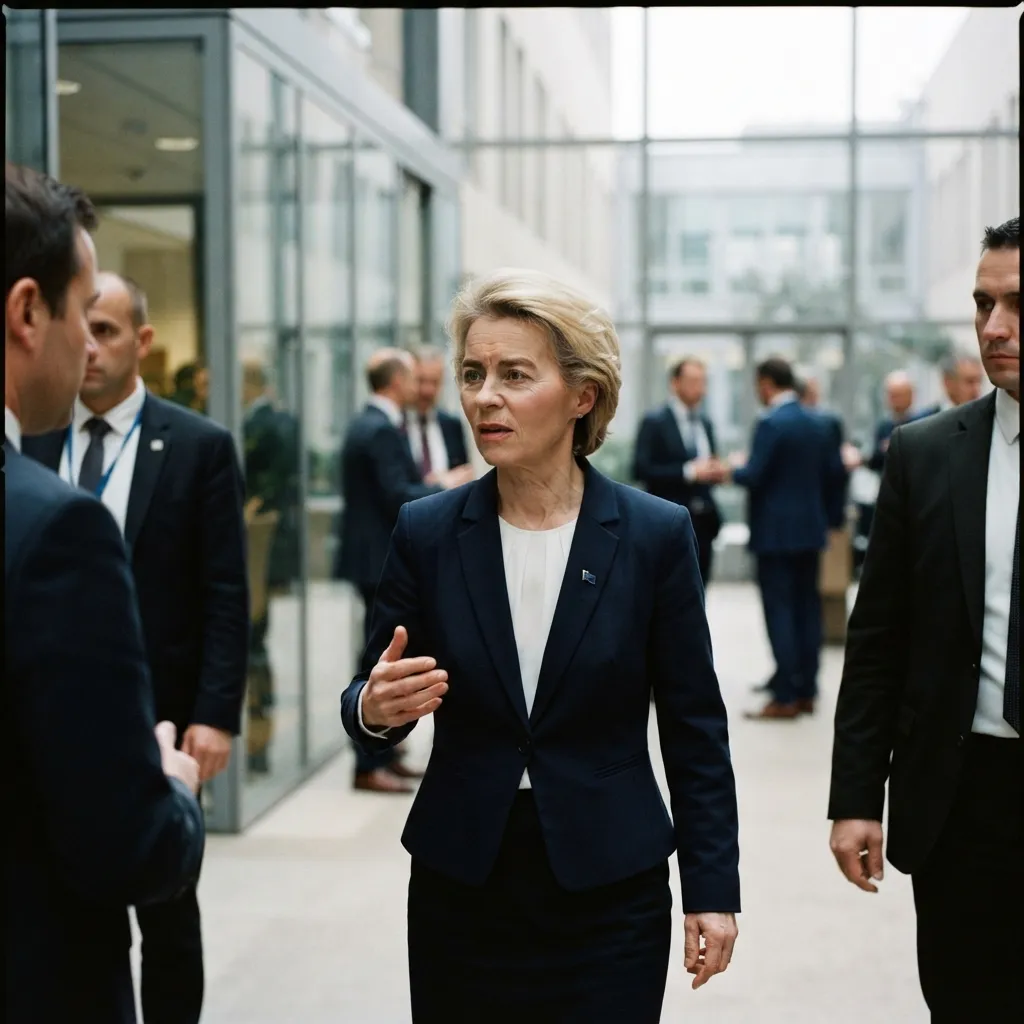
European Commission President Ursula von der Leyen has unveiled a rigorous new set of proposed sanctions designed to further isolate Russia and drain the financial resources fueling its ongoing invasion of Ukraine. The plan takes an aggressive approach toward the Russian economy by targeting sixty additional banks for removal from the Swift international payment system and cracking down on cryptocurrency platforms often used to bypass existing restrictions. To ensure these rules are actually followed, the commission intends to launch a dedicated crypto sanctions task force aimed at identifying and penalizing third parties helping Moscow evade penalties.
Beyond the digital and financial realms, the proposal seeks to tighten control over physical trade and movement. Von der Leyen is calling for seventy more ships from Russia’s so called shadow fleet to be blacklisted, alongside a total ban on Russian tankers entering European ports. On a personal level, the measures would prohibit Europeans from holding senior executive positions within Russian firms and introduce strict visa bans for former combatants who fought in Ukraine, citing them as significant security risks who should not have free access to EU territory.
The strategy also extends into the arena of soft power and national prestige. The commission wants to effectively erase Russian branding from the continent’s public life by banning sports teams and athletes from competing under their national flag and prohibiting the display of Russian symbols at cultural events. This represents a push to shut the door entirely on Russia’s presence in European civic society while maintaining relentless economic pressure through every available channel.
These proposals now face a critical hurdle as they require unanimous endorsement from all twenty seven EU member states before becoming law. While this diplomatic process can often take weeks and frequently leads to modifications of the original terms, it follows a period of escalating intensity in Brussels. Just last month, the bloc implemented its largest ever single list of sanctions, focusing heavily on officials and companies tied to Russia’s military industrial complex and weapons production.